Stop Gifting Flowers That Fade: The 2026 Trend of Purposeful Preserved Florals
Blake
3/23/20263 min read
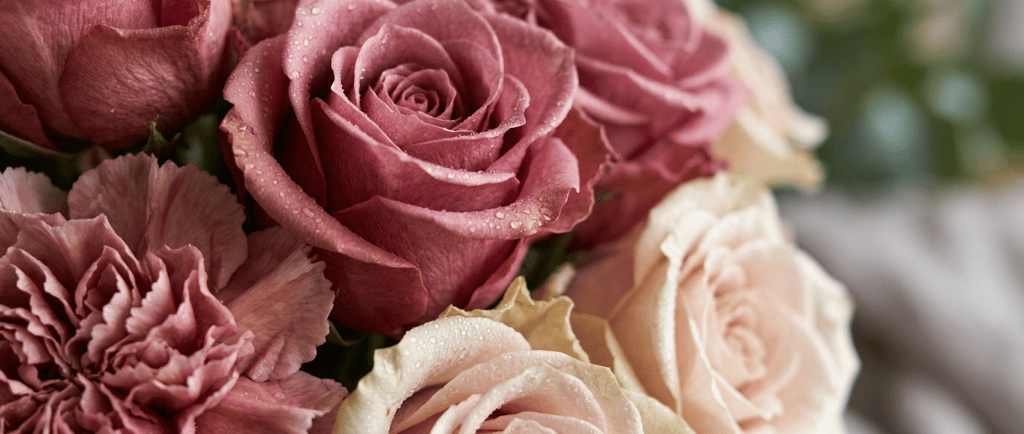
If you're still hesitating about the cost of a preserved floral solution, take a look at this high-end wellness and residential complex in Houston.
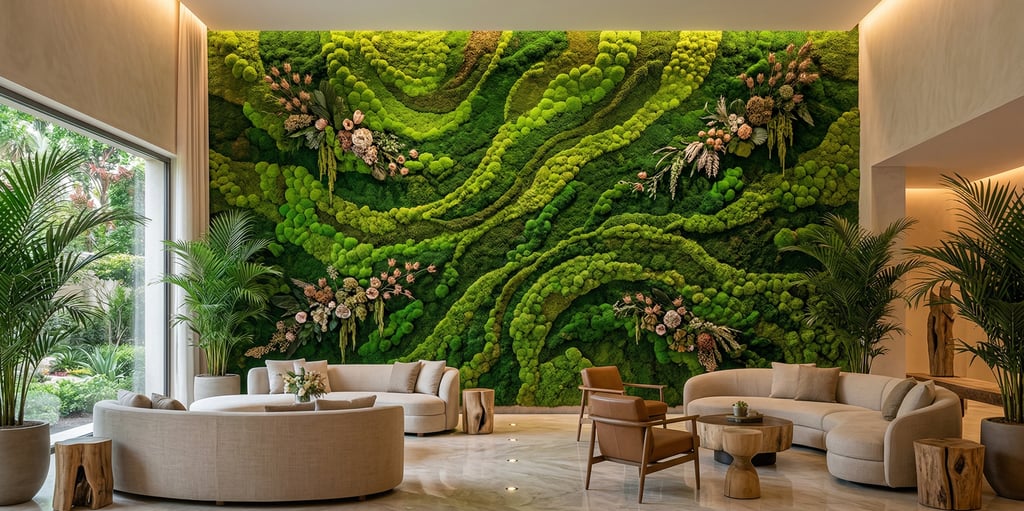
The design team faced a core dilemma in the early stages: How can we create a visually stunning, "forest-level" impact indoors without adding long-term operational burdens? Ultimately, they chose a combination of preserved moss and preserved botanicals. To add a natural architectural feel to the smooth moss base, we embedded highly elongated preserved botanical fruits and leaves into the wall, outlining organic, flowing curves.
The ROI for this decision was incredibly direct:
Saved 15% on Upfront Infrastructure: Traditional living green walls require complex plumbing, drainage, and waterproofing. This preserved solution is mounted directly on the wall, completely eliminating the need for drainage systems and the high electricity costs of plant grow lights.
Zero Annual Maintenance Fees: For a living wall of this scale, annual maintenance (pruning, pest control, replacing dead plants) would cost at least $5,000 to $8,000. Now? The property staff simply dusts it occasionally. That is thousands of dollars saved, year after year.
Why is this "Purposeful Beauty"?
Consumer psychology in 2026 has shifted from mere "ownership" to "experience" and "efficiency."
Whether you are looking for a long-lasting visual anchor for your shopping mall, or a sophisticated gift box that won't end up in the trash after a week, preserved florals are the choice that balances aesthetics and rationality. They don't just freeze beauty; they represent a respect for space and a commitment to conserving resources.
🌿 Shop the Look: Premium Preserved Botanicals
If you are planning to build a commercial green wall or craft high-end floral gifts, click the links below to explore our core materials used in these designs:
👉 [Panicle Hydrangea] — The top choice for creating a natural, airy feel and light volume.
👉 [4-5cm Preserved Carnation Head] — Featuring delicate, multi-layered textures, this is a versatile essential for elevating the sophistication of any floral gift box.
👉 [Preserved Nigella Orientalis] — An artistic botanical perfect for outlining natural, architectural lines in commercial wall designs.
👉 [A Grade 5-6cm Preserved Rose Head] — The rigorously selected, full-bodied centerpiece that defines the tone of high-end floristry.
As a floral brand owner with a decade of experience, I've noticed a major shift in the 2026 market. Clients are no longer satisfied with fleeting "freshness." They are pursuing "purposeful beauty"—top-tier visual impact combined with a zero-waste, sustainable philosophy.
However, in my daily conversations, the most common concerns I still hear are: "Will preserved flowers look fake?" or "How long can they actually last in a humid environment?"
Today, I want to address these biases and share how we use technical innovations to help preserved botanicals generate incredible ROI (Return on Investment) in high-end commercial spaces.
Don't Be Fooled by the "Fake" Stereotype
Many people's impression of preserved flowers is stuck on the cheap, dry textures of years past. But in 2026, the selection and processing of premium floral materials have completely broken through those old bottlenecks.
I always tell my clients: Preserved flowers aren't a substitute for fresh flowers; they are the "peak moment" of a fresh bloom, frozen in time. We strictly select top-tier A-grade flowers with the most uniform petal thickness and fullest shapes. This rigorous selection process is beyond the reach of standard floristry. More importantly, they maintain their perfect state for 1 to 3 years or even longer. The emotional value and spatial stability brought by this "ultra-long standby time" are things ordinary fresh flowers simply cannot provide.
The Industry's "Open Secret" and Our Hardcore Solution
Within the industry, everyone is actually quite afraid of two things: direct sunlight and high humidity. Humidity, in particular, is the "natural enemy" of preserved flowers. If the environment is too damp, petals easily become translucent or even moldy.
But to establish a foothold in high-end commercial and wellness spaces, we had to solve this problem. We currently utilize an advanced high-humidity color-locking technology, specifically designed for complex environments like hotel lobbies and premium clubs. Even in spaces with fluctuating humidity, it locks in the plant's original color without any awkward bleeding or fading. This means you can boldly incorporate naturally delicate and fragile floral materials into your designs without constantly worrying about their lifespan.
A Real-World Case: The Watermark at Houston Heights, Texas
EterniBlossom
Premium dried flowers for global business solutions.
contact us
Request Quote
© 2025. All rights reserved.
ADRESS
No. 267 Wangjiaying, Yinlian Community, Dounan Subdistrict, Chenggong District, Kunming City, Yunnan Province, China
Email: inquiries@yunnandriedflower.com
Phone: +86 18288702389(Wechat)
Whatsapp: +86 18288702389